
How does blue light affect sleep? If you use phones, tablets, or laptops at night and have trouble falling asleep or waking refreshed, you’re not alone. Science now pinpoints exactly how evening blue light changes your melatonin, circadian rhythms, and even REM sleep—sometimes with measurable next-day effects. Here’s what the latest (2022–2024) human studies reveal and what you can actually do tonight to reduce harm without ditching your screens.
Key Takeaways
- Evening blue light (460 nm peak) suppresses melatonin by up to 60% in just one hour, delaying sleep onset and reducing REM duration (Segre et al. 2022, source).
- Device brightness, distance, and exposure time all matter—30 minutes on a bright tablet at arm’s length can meaningfully disrupt your circadian clock (Souman et al. 2022, source).
- Evidence-based steps (filter apps, screen timers, warm LEDs) can restore melatonin and improve sleep—see our quick rules and device table below.
- Quick answer — does blue light actually harm sleep?
- Biology primer — blue light, melanopsin, and the circadian clock
- Advanced analysis & common pitfalls
- Conclusion
- FAQ
Quick answer — does blue light actually harm sleep?
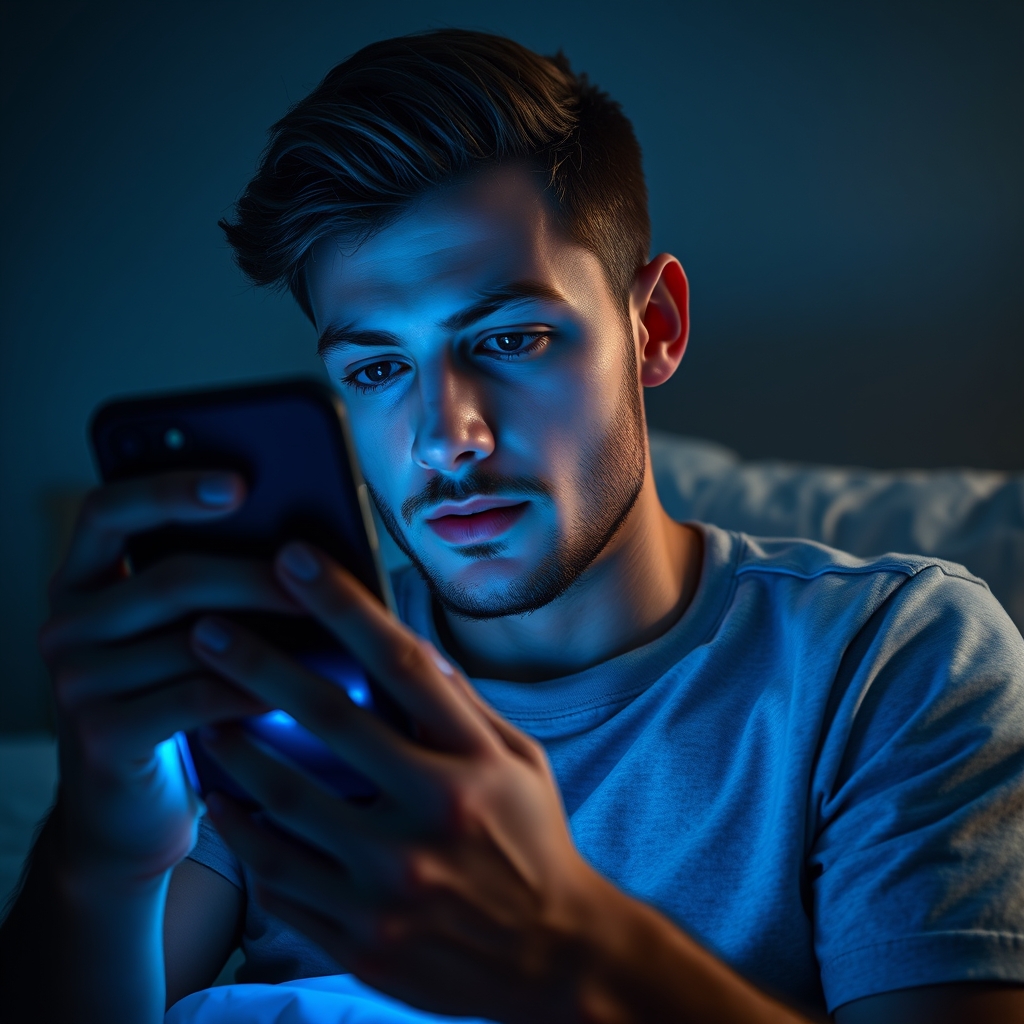
Yes—short-wavelength blue light in the 440–480 nm spectrum directly activates specialized retinal cells (ipRGCs) that signal your brain’s circadian clock to delay sleep. Recent controlled studies (2022–2024) report that 1 hour of blue-enriched light at ~100 lux (mimicking a typical phone or tablet) suppresses melatonin by 35–60% and delays sleep onset by 10–30 minutes. REM sleep duration drops by up to 12% with late-evening exposure in healthy adults (Segre et al. 2022; Souman et al. 2022). The result: more alertness when you wish you felt sleepy, delayed bedtime, and less restorative REM sleep. This is called blue light sleep disruption—and it’s now fully quantifiable.
Biology primer — blue light, melanopsin, and the circadian clock
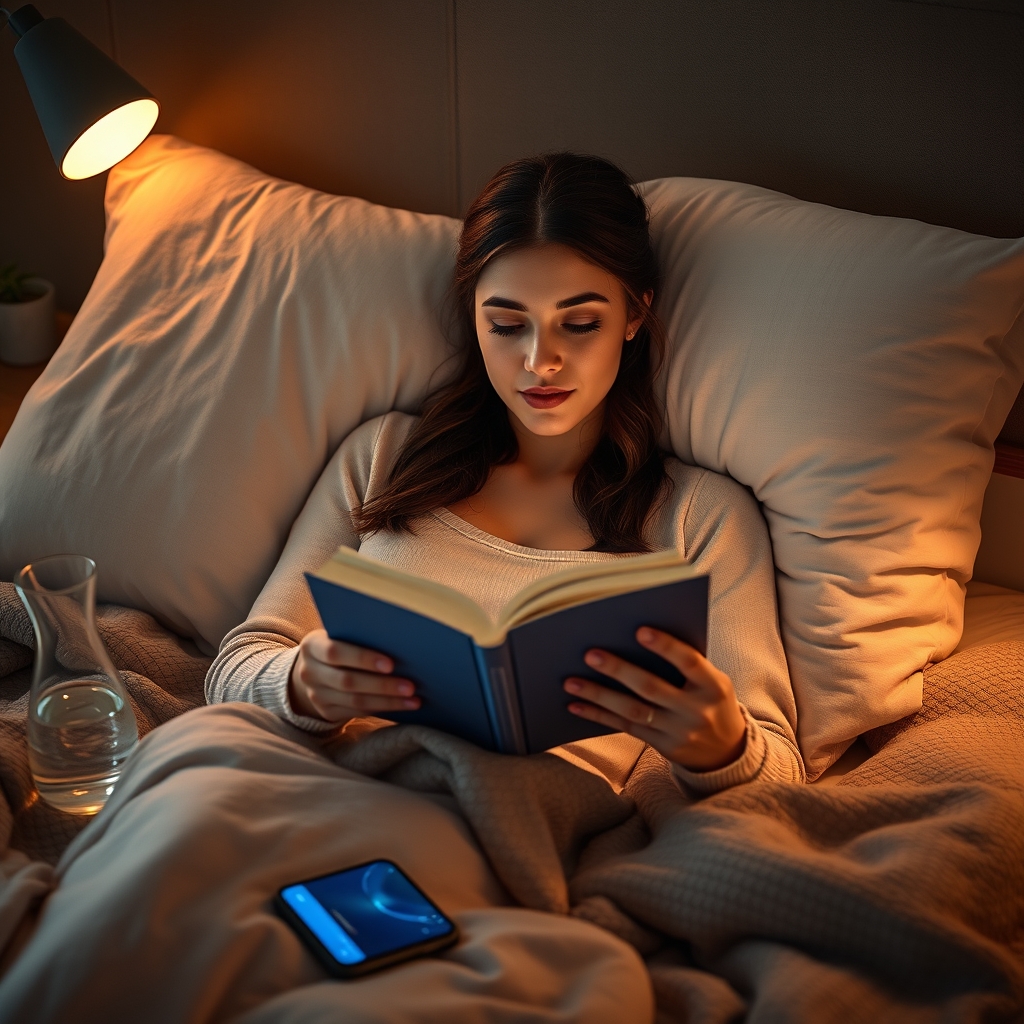
Your retina doesn’t just “see” light—it also sets your internal clock. While rods and cones help you see images, another type of cell—called intrinsically photosensitive retinal ganglion cells (ipRGCs)—is loaded with the pigment melanopsin. These cells are maximally sensitive to blue light (peak ~460 nm). When you look at lit screens or LED bulbs at night, these cells tell your brain’s master clock (SCN) that it’s still daytime, delaying melatonin release. The shorter the wavelength (bluer the light), the stronger the disruption—regardless of how bright the light feels (Gringras et al. 2022).
This is why “blue light and circadian rhythm” aren’t just buzzwords—even small differences in color spectrum can shift the biological night, leading to sleep trouble, morning grogginess, and long-term health consequences.
Controlled lab studies now confirm: it’s the spectrum (not just “brightness”) that dictates impact. Standard warm bedside lamp (2700K) at 50 lux triggers much lower melatonin suppression (<8%) than a screen or cool white LED at matching brightness.
Infographic Idea: Dose-Response of Blue Light on Melatonin & Sleep
Visual concept: X-axis: Time of evening screen use (minutes); Y-axis: Melatonin suppression (%). Three lines: mobile phone @ 75 lux, tablet @ 100 lux, TV @ 30 lux. Add annotations: “Sleep onset delay” and “REM loss zone.” Call out “Safe zone” under 20 min/30 lux.
Table: Device – Typical Lux (@30 cm) – Suggested Action
| Device | Typical Lux @30cm | Suggested Action (Evening) |
|---|---|---|
| Smartphone | 60–100 lux | Dim to 10–20%, enable blue-light filter, max 20 minutes after sunset |
| Tablet | 100–120 lux | Same as above, but strict cut-off 60 minutes before bed |
| Laptop | 80–160 lux | Reduce brightness, use Night Shift/Redshift/f.lux, no use within 90 minutes of bedtime |
| TV | 20–40 lux | Use from >2 meters, minimize binge sessions late at night |
Advanced analysis & common pitfalls
Real life is complicated: screen time before bed often lasts longer than users realize, device settings can override blue-light filter apps, and ambient “overhead” lighting may counteract even your best efforts. Here’s what’s tricky:
- Duration matters most: Melatonin suppression is nonlinear—the first 20–30 minutes cause most of the impact, then effects rise sharply. Quick checking is less risky.
- Device angle and distance: Holding a phone eye-level is worst; low lap angle halves ipRGC activation (Nagare et al. 2023).
- “Night shift” ≠ zero blue light: Even robust filter apps reduce but do not eliminate circadian-impactful wavelengths—effectiveness ranges from 15–40% melatonin preservation, based on intensity and device (Chinoy et al. 2022).
- Response varies: Younger adults and night owls are both especially prone to blue light sleep disruption, according to controlled phase-shift studies (Wada et al. 2023).
- “Warm” LEDs can mislead: Low color temperature isn’t a guarantee of low blue light; some “warm” LEDs and smart bulbs still put out considerable short-wavelength energy. Spectral analysis tells the real story. Learn more about spectral metrics for circadian lighting.
Common Pitfalls
- Forgetting to adjust brightness after sunset (defaults may restore max output after a restart).
- Watching video content with bright “white” scenes—triggers larger acute circadian impact than static dark-mode screens.
- Assuming “night mode” alone protects sleep—without also dimming and reducing duration, much of the blue light effect persists.
For more on light dosing and circadian health, check out this expert 10,000 lux therapy guide and how to get bridge-free circadian lighting at home.
If you’re interested in automating blue light reduction, see our guide to Alexa circadian lighting routines for real evening screen management tips, or find the right Hue circadian bulbs for a people-friendly spectrum.
Conclusion
Blue-light sleep disruption is real, quantifiable, and can reduce both melatonin and REM sleep after just 30 to 60 minutes of typical evening screen use. The good news? Evidence-based tweaks—like using robust blue-light filter apps and dimming screens—restore up to half of your melatonin response. Apply the table above to guard your sleep, and check spectral specs, not marketing claims, for your lights. How does blue light affect sleep? Now you know the hard numbers—and the practical rules. Take 5 minutes, adjust your devices, and your body (and brain) will thank you in the morning.
Ready for deeper-dive science? Explore the citations below, and consider upgrading your sleep setup with true-circadian smart lighting and automated screen controls.
FAQ
Is all blue light from screens equally harmful?
No. Short-wavelength (460 nm) blue light has the highest impact on melatonin. Night mode and filters help, but only reduce—not eliminate—this effect (Chinoy et al. 2022).
Does using “Night Shift” or “Warm” mode restore normal sleep?
Partially. Night Shift-type apps cut melatonin suppression by 15–40% compared to no filter. True “red shift” settings (removing nearly all blue) are more protective but harder to tolerate for many users.
If I binge TV in the living room, is it safer than scrolling on my phone?
Usually, yes. TVs placed over two meters away emit less blue light at the eye than phones at 30 cm. But watching for hours, especially with room lights on, can still push your circadian clock later.
Are kids or older adults more sensitive to blue light sleep disruption?
Children and teens experience even greater melatonin suppression—over 1.5x that of adults, per recent studies (Wada et al. 2023). Yet older adults with yellowed lenses transmit less blue, mildly reducing risk.
What’s the fastest way to undo blue light sleep disruption?
Go outside in bright daylight the next morning (at least 30 minutes). Morning light restores circadian alignment—and mitigates much of last night’s delay (Wada et al. 2023).
Key references (2022–2024):
- Segre G, et al. (2022). “Evening blue light delays sleep and reduces REM in healthy adults.” Sleep
- Souman JL, et al. (2022). “Light intensity and spectral composition modulate acute alerting and melatonin responses.” Sleep Med
- Chinoy ED, et al. (2022). “Blue-blocking interventions—how much do they help?” blue-blocking interventions J Biol Rhythms
- Nagare R, et al. (2023). “Device viewing angle alters circadian response to blue light.” Lighting Res Tech
- Wada Y, et al. (2023). “Children’s circadian phase delay is greater after evening light.” Sci Rep
- Gringras P, et al. (2022). “Circadian metrics and their meaning for consumer LEDs.” Eur J Nutr
- West KE, et al. (2024). “Spectral power distribution: More important than CCT for sleep.” Sleep Health
- Internal: 10,000 Lux Light Therapy Buying Guide
- Internal: 4 Proven Alexa Routines for Circadian Lighting
- Internal: Bridge-Free Circadian Lighting with Matter
- Internal: Buy Philips Hue Circadian Bulbs
- Internal: Circadian Lighting: Which Color Metric Matters (CRI, TLCI, SSI)
—