
CRI vs TLCI vs SSI for circadian lighting is no longer a trivial technical debate—if you specify tunable white fixtures for hospitals or workspaces, understanding which color rendering metric matters can make or break both color fidelity and measurable circadian performance. Here’s how to navigate the tradeoffs and get specs right for human comfort, alertness and real-world results.
Key Takeaways
- CRI and TLCI support visual color fidelity but miss biological/circadian effectiveness. For occupant comfort, you must specify more than just a high CRI.
- Use SSI and full SPD files to compare or match light sources for circadian response—especially when melanopic efficacy matters.
- Combine color fidelity metrics (CRI/TLCI) with a-opic/melanopic EDI metrics and SPD files in every RFP. Always request on-site visual confirmation for critical skin/medical task performance.
- Quick executive summary — CRI vs TLCI vs SSI for circadian lighting
- Step-by-step guide: Which metrics, when, and how to specify them
- Advanced analysis & common pitfalls: Combining and applying color metrics
- Conclusion: Making color metrics work for circadian lighting
- Frequently Asked Questions
Quick Executive Summary — CRI vs TLCI vs SSI for circadian lighting
Which color rendering metric matters most for circadian lighting in real healthcare and workplace projects? Here’s the punchline for specifiers:
- Use CRI and TLCI if your priority is visual color fidelity, like skin tone accuracy or food presentation, but don’t assume these alone deliver comfort under tunable white fixtures.
- Use SSI or, preferably, the full Spectrum Power Distribution (SPD) when balancing between color quality and circadian stimulation—especially if you need to target specific melanopic or a-opic (biological) responses. Melanopic metrics (like EML, CIE S 026 quantities) should always be reported when occupant alertness or circadian health is in scope.
- Combine: For healthcare and demanding office environments, specify both CRI/TLCI targets for color fidelity and require manufacturers to provide SPD files, melanopic/CLA/EDI outputs, and SSI catalog match if replicating a reference. Demand visual confirmation tests on-site for skin/medical-critical lighting.
Most studies and clinical protocols focus on particular spectrum zones—RL, NIR, and amber light of 590 nm, which is close to red light (source). Prioritizing only one metric risks ignoring either visual comfort or circadian efficacy.

Step-by-step guide: Which metrics, when, and how to specify them
-
Identify the primary application and stakeholder priorities.
- Healthcare: If the urgent need is accurate visual assessment (wound care, skin tone), use high-CRI (≥90) and require SPD files that reveal red/amber/near-infrared emission. For patient alertness or rest, request CIE S 026 melanopic EDI values as part of your deliverables—see our CIE S026 calculator guide.
- Offices: For all-day comfort and alertness, combine CRI > 80 (for appearance) with state-daytime melanopic EDI targets (150+ lux at eye or as local standards advise). Include tunable/scene-based controls.
-
Request full SPD files, not just CRI numbers.
Most circadian impacts depend on the spectral shape. SSI can help if you need a close match to reference daylight/halogen, but an SPD from the manufacturer is non-negotiable. -
Use color and circadian metrics together in RFPs and commissioning.
Specify:- CRI (Ra), R9, TLCI90+ if video is needed.
- Complete SPD file for all scenes/CCTs.
- SSI match if matching source fidelity for legacy/creative constraints.
- Melanopic EDI, a-opic/CLA or equivalent.
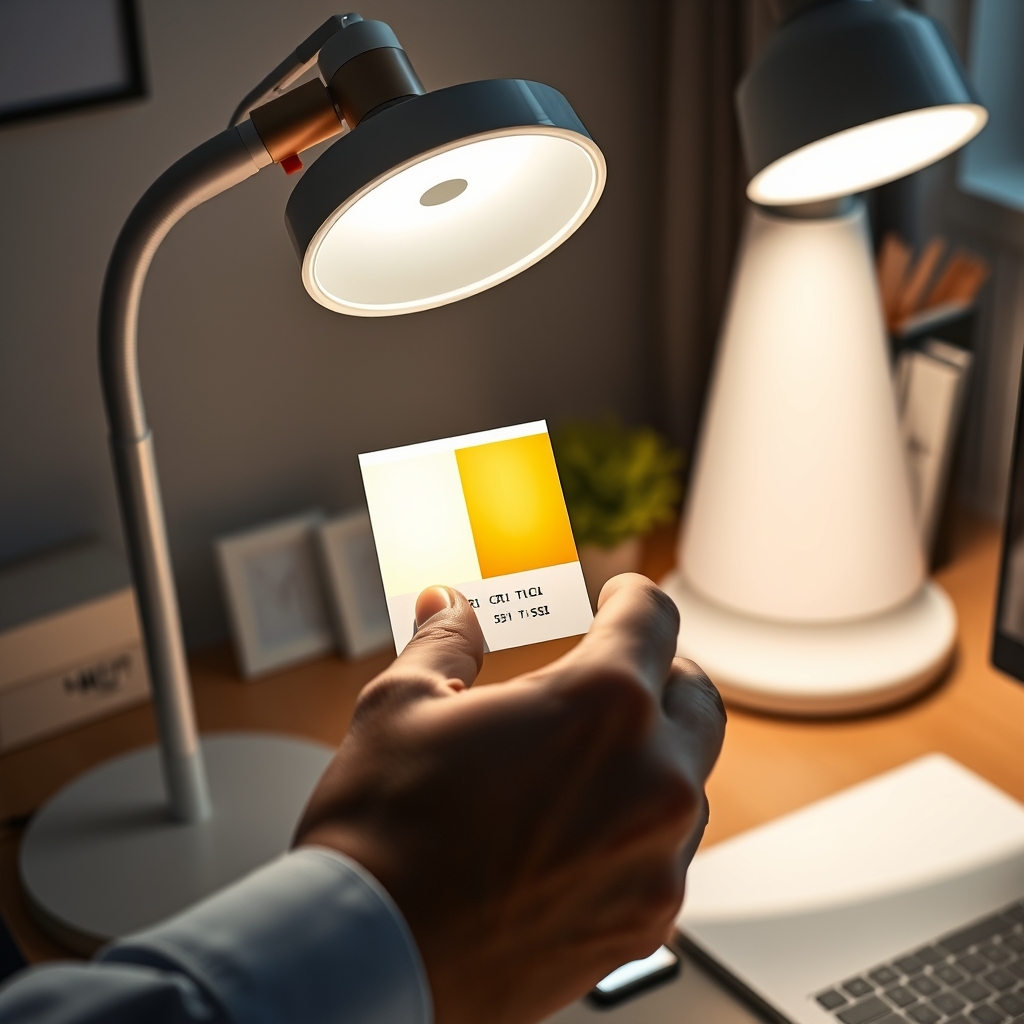
- On-site color check with skin swatch cards or reality-checked color tasks (especially for medical use).
-
Test actual occupant outcomes whenever possible.
As clinical studies show (source), repeated-use protocols (12 minutes/session, 30+ sessions) and blinded evaluation are the gold standard for confirming both visual comfort and circadian effects.
Want a side-by-side system comparison? See our Best Circadian Lighting Systems Comparison Guide for real-world SPD and metric data on common smart bulbs.
Advanced analysis & common pitfalls: Combining and applying color metrics
Even experienced specifiers struggle with the tradeoffs between CRI, TLCI, and SSI for circadian lighting. Here are the most common and costly pitfalls, paired with actionable countermeasures:
| Metric | Strengths | Known Issues in Circadian Lighting | Typical Missteps |
|---|---|---|---|
| CRI | Measures match to incandescent visual fidelity; easy to compare lamps; standard for RFPs. | Ignores spectrum shape critical for circadian/biological effect. Omits many wavelengths (590 nm amber, near-IR, deep red) affecting comfort and wound evaluation. | Specifying high CRI but ignoring R9 or missing SPD; assuming CRI predicts circadian outcome. |
| TLCI | Great for video/camera pipeline; catches more camera-perceptual issues. | Optimizes for cameras, not eyes; may mislead if used for human comfort or circadian targets. | Selecting for TLCI in camera-free environments (offices, patient rooms), missing human visual pitfalls. |
| SSI | Compares spectral similarity to reference; useful for matching legacy look/feel or aligning with research protocols targeting RL, NIR, and amber zones (source). | Requires cataloged spectral data; vendors inconsistent in reporting; unclear link to actual melanopic output. | Ordering “SSI matched” catalog numbers without confirming circadian (melanopic/EDI) performance. |
Key failings in projects:
- Assuming high-CRI ensures high circadian impact (they aren’t directly linked)
- Not requesting full SPD—missing red/amber/near-IR “holes” invisible to CRI
- Ignoring melanopic/CLA/EDI reporting: can’t justify alertness claims for workplace wellness or healthcare recovery
- Skipping visual/clinical commissioning: true color acceptance and comfort aren’t revealed in specification numbers alone
Clinical studies reinforce this: high-quality projects use repeated, structured protocols (e.g., twice-weekly, 12-minute sessions, 30 sessions) to reveal effects, not one-off color checks (source).
For more guidance on medical and a-opic metrics, explore our CIE S026 Calculator guide.

Conclusion: Making color metrics work for circadian lighting
When specifying tunable white lighting for projects where human comfort, alertness, and visual fidelity matter, there’s no single winning metric. CRI vs TLCI vs SSI for circadian lighting is about balancing visual appearance (CRI/TLCI), practical spectrum planning (SPD/SSI), and measurable biological impact (melanopic/EDI/CLA). Demand transparent SPD data, require melanopic outputs, and never skip real-world commissioning—your end users’ performance and well-being depend on it.
Want hands-on reviews and real product comparison data? Check out our Best Circadian Smart Bulbs for HomeKit Buying Guide and Philips Hue Circadian Bulb Savings Report.
Ready to upgrade your specifications? Start requesting full spectral and melanopic metrics today and see the difference in occupant outcomes.
Frequently Asked Questions
Does a higher CRI always mean better circadian lighting?
No. High CRI (≥90) means colors will look accurate to the eye versus incandescent/reference light, but it doesn’t guarantee strong circadian (melanopic) stimulus. You need full SPD and melanopic metrics for that.
When should I use SSI instead of CRI or TLCI?
Use SSI when you need to match a reference spectrum for legacy look/feel or clinical protocol replication. SSI helps compare spectral shapes, but you still need to confirm melanopic metrics separately for true circadian impact.
What about TLCI in healthcare? Does it improve patient comfort?
TLCI optimizes for how colors appear to cameras. This may help in telemedicine rooms or where diagnosis is done via video, but for direct patient comfort and clinical accuracy, CRI plus melanopic/EDI metrics matter more.
How do I actually check if a tunable white luminaire delivers what’s promised?
Request SPD files, on-site visual tests under each control scene, and real a-opic/melanopic results at the workplane. Involve staff in visual checks with skin swatches for healthcare settings—numbers alone aren’t enough.
Is there a way to simplify specification language for RFPs?
Yes. Example: “Fixtures must provide ≥90 CRI and R9 ≥50 at all CCT scenes, submit full SPD and SSI match to [reference]. Provide melanopic EDI and a-opic data at workplane level. On-site skin tone rendering and color swatch test required pre-handover.”