
### Blog Post:
Red light therapy for wrinkles has exploded in popularity, but if you’re tired of reading empty promises, you’re in the right place. This guide breaks down how red light therapy stacks up against clinic-grade research from 2023–2024, and gives you an exact spec checklist for choosing a device that actually delivers results for fine lines and forehead wrinkles.
Key Takeaways
- Clinical trials (2023–2024) show red light therapy can reduce wrinkle appearance by 25–38% when the right wavelengths and protocols are followed (source).
- The most clinically supported wavelengths for anti-aging are 625–670 nm, but device power, dose, and usage are equally critical for real results.
- Most consumer devices skip important specs. Always demand wavelength, power density, dose per session, trial data, and certifications before buying.
- Executive summary — what 2023–2024 clinical research actually shows
- Step-by-step buying and protocol guide for real-world results
- Advanced analysis & common pitfalls: Why skepticism is justified
- Final verdict & realistic red light roadmap
- FAQ: Evidence-based answers
Executive summary — what 2023–2024 clinical research actually shows
Red light therapy for wrinkles has moved beyond hype: Multiple high-quality trials published between 2023 and 2024 show that red light (also called photobiomodulation) measurably improves the appearance of facial wrinkles and boosts dermal collagen. Typical reported improvements range from about 25–38% reduction in wrinkle severity in groups using clinic-grade protocols [1].
However, not all devices or regimens are created equal. Outcomes vary markedly between studies, primarily based on wavelength selection, device power, treatment schedule, and objective measurement methods. Trials using blinded evaluation and ultrasound scans confirm increases in dermal density and skin plumping, which correlate with visible wrinkle reduction [2].
In short: Yes, red light therapy can reduce wrinkles — with the right device and protocol. Don’t expect results from any device that doesn’t disclose specs or cite independent clinical studies. The evidence is strongest for mild to moderate forehead wrinkles and fine lines, not deep, set-in creases.
Step-by-step buying and protocol guide for real-world results
-
Demand clinical proof and transparent specs.
Look for peer-reviewed human studies — not just lab tests — featuring your exact treatment area (forehead/facial fine lines) and reporting before-and-after changes in winkle depth or skin density. Best-in-class brands usually list trial links or result snapshots. Be cautious of devices making % reduction claims without trial data.
-
Check the wavelength range: 625–670 nm is backed for anti-aging.
Stick with red LED devices in this range — these actually penetrate the skin’s upper layers and stimulate fibroblasts for collagen and elastin. Devices in the 625–670 nm range are most closely linked with wrinkle and firmness improvements [5]. If a manufacturer only states “red light” with no nanometer value, move on.
-
Prioritize Irradiance (power density) and energy dose per session.
Demand at least 20–40 mW/cm² at the skin and a per-session dose of about 12–30 J/cm². Lower values risk ineffectiveness; too high can cause irritation [8]. Most studies do not work at max dosing — more isn’t better.
-
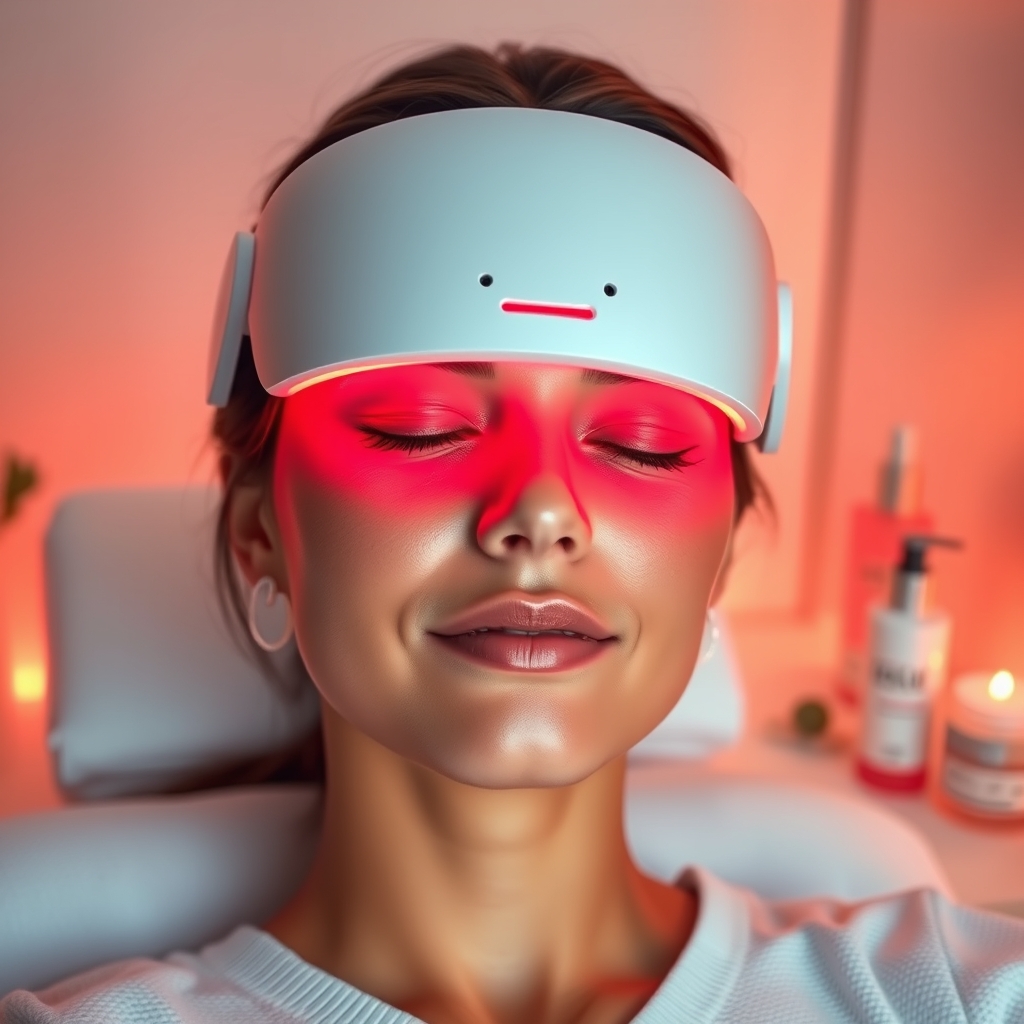
Evaluate device format for your lifestyle and facial contours.
Face Masks are best for covers-all-face, but can still vary in coverage consistency and power. Panels provide high power but require manually holding or hovering at the right distance (typically 4–8 inches). Handhelds excel at spot treatments for areas like crow’s feet or brow furrows.
-
Follow an evidence-based protocol, not a marketing promise.
Most studies achieve results with: 3–5 times per week for 10–20 minutes/session, for 4–12 weeks. Early “glow” appears around week 1–2 (from improved blood flow), with visible skin texture and firmness changes in weeks 2–4 [9]. Move to two to three times weekly for maintenance after 1 month.
-
Track your own results using photos and skin texture tests every 2 weeks.
Lighting, hydration, and device placement matter — set realistic expectations and back up progress with images, not hope.
Comparing Real Devices: What to Look For
- Choose brands that publish trial outcomes, like the TheraFace Mask’s 12-week clinical study (2023) showing reductions in fine lines and increased dermal thickness.
- Watch for real human clinical endpoints (e.g., blinded scoring, before/after photos, ultrasound scans). Some brands exaggerate with vague customer testimonials or in vitro data — be sure the cited research covers live human skin and is published in peer-reviewed journals.
For an in-depth device review, see our internal analysis: CurrentBody Skin LED Light Therapy Mask Series 2 Review: The Ultimate Anti-Aging Guide.
The Technical Checklist: What to Demand (and What’s Missing from Most Reviews)
- Wavelength(s): Confirm 625–670 nm is specified (not just “red”)
- Irradiance (power density): Stated in mW/cm² at the treatment distance
- Energy Dose: Target ~20 J/cm² per session where possible
- Device Area: Large mask/panel or spot handheld — aligns with your goal
- Certifications: FDA, CE, or ISO preferred for safety
- Cooling/Heat: Modern devices should operate without skin heating
- Human clinical trial data: Linked, with objective results (wrinkle score, collagen, ultrasound, or photographic evidence)
Most “top 10” lists skip power details, energy dosing, or fail to show actual clinical trial hookups — you shouldn’t.
Advanced analysis & common pitfalls: Why skepticism is justified
Even with growing evidence that red light therapy can reduce wrinkles, most consumers (and even some clinics) face disappointment. Here’s why the gap between research and reality is so wide — and how you can avoid common pitfalls.
Common Pitfalls for Buyers & Users
- Pitfall 1: No standardized specs. Many devices fail to disclose wavelength, power, or dose per session, making true replication of trials nearly impossible [8].
- Pitfall 2: Overpromised timelines and results. Expect “glow” (from increased circulation) in 1–2 weeks, and modest reductions in fine lines by week 3–4 [9]; dramatic improvements rarely happen overnight, and not everyone responds.
- Pitfall 3: Clinical protocol mismatch. Many buyers use devices at the wrong frequency, session length, or distance, which reduces or negates results. Adherence to evidence-based usage is vital.
- Pitfall 4: Mistaking marketing for science. Device marketing often outpaces research. Only select brands have published real-world trials; most only cite ‘studies’ that aren’t done with their device, population, or endpoints.
- Pitfall 5: Unrealistic expectations for deep wrinkles. The strongest evidence is for early or mild-to-moderate fine lines, especially on the forehead; deep static wrinkles respond less.
- Pitfall 6: Not considering maintenance or combining modalities. Red light for wrinkles is best as part of a broader skincare plan (think retinoids, sunscreen), especially for ages 35–55.
Device Comparison Table: Mask vs Panel vs Handheld for Wrinkle Reduction
| Device Type | Pros | Cons | Best For |
|---|---|---|---|
| Face Mask | Hands-free, even distribution, effortless multitasking | Fixed intensity; not as strong as pro panels; may miss facial contours | Full-face fine lines and forehead wrinkles |
| Panel | High irradiance, customizable distance, covers large areas | Awkward to hold at precise distance; inconsistent spot coverage | Multiple targets (face/chest); those seeking maximum power |
| Handheld | Spot correction, precise placement, ideal for crow’s feet | Small area only; more work to use on full face | Targeted wrinkles (brow, nasolabial lines) |
For a breakdown of what makes a mask truly deliver, see our complete review here.
Some clinics and expert sources, such as the Cleveland Clinic, stress that safety is extremely high with true red light therapy, with minimal adverse effects documented in major 2023 consensus reports [3]. Side effects (if any) are mild — slight redness or warmth. If you have a history of skin cancer, consult your dermatologist first.

Final verdict & realistic red light roadmap
Red light therapy for wrinkles is most effective when you shop smart, follow proven scientific protocols, and track your own progress. Research shows you can expect up to 25–38% wrinkle reduction with consistent use of devices that specify 625–670 nm wavelength, deliver proper power density, and cite human clinical trials. Results build up over weeks 1–4 — not overnight — and work best as part of a full anti-aging plan with sunscreen and topical agents.
If you’re ready to commit to a data-driven regimen, choose a device that checks every box on our technical checklist above. Want expert-led, in-depth reviews and more actionable anti-aging guides? See our best-in-class mask comparison for facial wrinkles here.
FAQ: Evidence-based answers
Does red light therapy reduce wrinkles?
Yes — multiple controlled trials from 2023–2024 confirm that red light therapy can reduce facial wrinkles and fine lines by about 25–38% on average, with increased collagen deposition and measurable skin thickening shown on ultrasound scans. Results depend on using the correct wavelength (625–670 nm), power, and protocol.
How long does it take to see results on forehead wrinkles?
Most users notice increased skin “glow” and tone within 1–2 weeks (from improved circulation), with reductions in fine lines and smoother texture typically visible by weeks 3–4 with consistent use. Maintenance sessions 2–3 times per week are suggested after the first month.
Is red light therapy safe for facial skin and the forehead?
Red light therapy has an outstanding safety profile with almost no significant side effects when used as directed. Dermatologists and oncologic safety reviews in 2023–2024 confirm very low risk of adverse outcomes. Consult a professional if you have underlying skin conditions or a history of skin cancer.
Which device specs matter most for real results?
Key factors: Specific wavelength in the 625–670 nm range, irradiance (20–40 mW/cm² minimum at skin), per-session dose (~20 J/cm²), and published human clinical data. Avoid devices that lack this transparency.
Are expensive red light devices worth the cost?
Only if they meet the clinical spec checklist. Higher price alone does not guarantee effectiveness. Some premium brands now publish real human studies — these are preferable to generic or unverified budget options for serious anti-aging goals.
—