
### Blog Post:
Red light therapy for collagen production is now supported by multiple, high-quality studies published from 2020 to 2024. If you want to stimulate collagen with red light at home, read on for realistic results, data-backed timelines, and the exact specs and settings you should demand in a device—without hype or guesswork.
Key Takeaways
- Multiple clinical trials show red light therapy improves skin elasticity and increases collagen density, with visible wrinkle reduction at 8–12 weeks.
- Look for devices disclosing wavelength (660 nm red or 830 nm near-infrared), irradiance (mW/cm2), and dose per session. Many “at-home” products lack this data.
- Protocol matters: Most real-world results require at least twice-weekly sessions for 4–12 weeks—consistency is essential for meaningful collagen change.
- Short answer — does red light therapy increase collagen?
- How red light increases collagen (mechanism, in plain language)
- What the 2020–2024 clinical data actually quantify
- Wavelengths explained — 660 nm vs 830 nm
- Typical clinical protocols reported
- Power, irradiance and dose — what researchers used vs what consumers are rarely told
- Evidence-based at-home protocols
- Common user challenges and disappointments
- What leading competitors rarely detail
- Safety, limitations and research gaps
- Practical “what to buy” checklist
- Quick summary / bottom-line takeaways
- FAQ
Short answer — does red light therapy increase collagen?
The clinical consensus is yes: red light therapy for collagen production is proven to work. Multiple controlled trials using wavelengths in the 590–830 nm range show not only reduced wrinkle depth but actual increases in intradermal collagen density.
For example, in a split-face trial (PMID: 36780572), 10 sessions of 660 nm and 590 nm light over 4 weeks resulted in a ~30% reduction in periorbital wrinkles—objectively measured through blinded photo assessments and skin replicas. Ultrasound and histology in similar studies consistently reveal increased type I collagen and improved elasticity. These effects are maintained with regular use, with ongoing studies affirming red light’s role in lasting skin rejuvenation.
For more detail on clinical data, see this comprehensive review and our own CurrentBody Skin LED Mask guide.
How red light increases collagen (mechanism, in plain language)
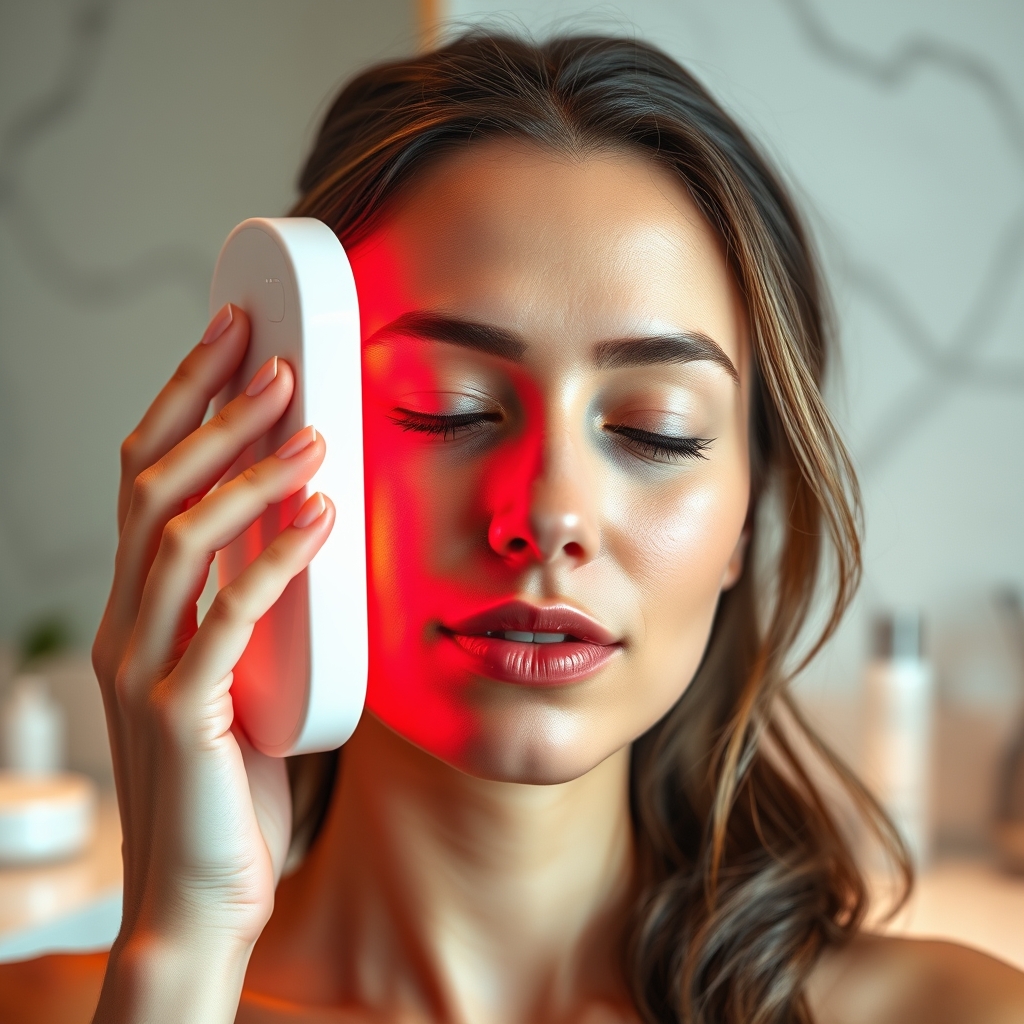
Red and near-infrared light penetrate below the skin surface, where they are absorbed by cell structures called mitochondria. This light exposure increases ATP (energy) production, which then triggers skin cells called fibroblasts to ramp up new collagen, elastin, and hyaluronic acid. Type I collagen—the main youthful “scaffolding” protein—shows real increases in repeated red light and near-infrared sessions, as confirmed by histologic analysis (MDPI clinical review).
What matters most is repeat exposure, not one-off use. Collagen remodeling is gradual—protocols generally require weeks of consistent dosing for visible and measurable improvement.
For in-depth explanation, visit our Red Light Therapy Mechanism post.
💡 Pro Tip: Always pair red light therapy with your current skincare base (such as retinoids or peptides). Clinical evidence supports better results when treatments are consistent and combined with proven actives.🔥 Hacks & Tricks: To maximize results, use your red light therapy right after gentle exfoliation. This may improve penetration—just wait for skin to fully dry before exposing to light.

What the 2020–2024 clinical data actually quantify (results, timelines, study designs)
Clinical trials from the past four years define clear outcomes:
- Study designs typically use 10–24 sessions over 4–12 weeks, with standardized before–after skin measurements.
- Early improvements in skin hydration and smoothness are often seen at 2–4 weeks (clinical reference).
- Measurable reductions in wrinkle depth (up to 30% at periorbital sites) and improvements in dermal elasticity and collagen density occur at 8–12 weeks, confirmed through ultrasound and histologic analysis (see study summary).
- Sample sizes in published studies typically range from 20–80 participants. Larger trials (>50 subjects) reinforce that results scale with adherence and protocol fidelity.
Wavelengths explained — 660 nm vs 830 nm
Most published research uses either red light around 660 nm, near-infrared at about 830 nm, or a combination. Theoretically, 830 nm penetrates deeper, but robust clinical “head-to-head” data showing exactly which wavelength stimulates more collagen is still limited. Reviews in 2023–2024 consistently observe that:
- 660 nm is the most common for collagen stimulation and anti-aging, with clear measured results.
- Many studies see similar or even greater improvements when combining 660 nm with 830 nm, but direct comparison data remains sparse (source).
If a device offers both, that’s a practical plus—but don’t expect 830 nm to be “better” unless clear comparative data is shown.
Typical clinical protocols reported
If you want to stimulate collagen with red light, consistency is key. Typical published regimens:
- Two to three times weekly sessions, lasting 10–20 minutes each, over 4–12 weeks (Vital Red Light trial).
- Example: A 20-participant study used twice-weekly treatments for 10 sessions, with significant improvements noted at 4 weeks (Instagram clinical summary).
- Most trials monitor final outcomes at or after 12 weeks (and some run 84 days or longer for full remodeling).
Remember: Missing sessions or stopping too early reduces your odds of visible, lasting results.
Power, irradiance and dose — what researchers used vs what consumers are rarely told
The three key device specs for red light therapy are:
- Wavelength (nm): 660 nm (red) and/or 830 nm (NIR) are the gold standard for collagen production.
- Irradiance (mW/cm2): Power delivered to skin. Most trials use 20–50 mW/cm2, but many consumer devices do not list this.
- Total dose (J/cm2): Calculated as irradiance × time. Trials often give 6–10 J/cm2 per session.
Most product pages highlight outcomes, not specs. Without this data, you cannot replicate clinical results. Transparent brands will list at least wavelength and either Irradiance (mW/cm^2) or total session dose. For an example brand that does provide these numbers, see our internal review of the CurrentBody Skin LED Mask.
Evidence-based at-home protocols (practical recommended settings)
If your goal is to stimulate collagen with red light at home, base your routine on proven study regimens:
Evidence-based 2-step protocol:
- Starter regimen: Use a 660 nm–wavelength device (or combined RL+NIR), treat for 10–15 minutes per session, 2–3 times a week. Stick to 10 sessions (about 4 weeks) for initial gains—this matches protocols that reduced periorbital wrinkles by 30% (clinical example 1).
- Full remodeling routine: Commit to 8–12 weeks’ steady use. Most studies reporting quantified improvements in collagen density and wrinkle depth did so over 12 weeks/84 days with at least twice-weekly dosing (clinical example 2).
- Fine-tune for power: If your device lists irradiance, aim for a total dose of at least 6–10 J/cm2 per area per session. (Total dose = irradiance × minutes × 60.) For lower-power masks, allow slightly longer session times (never exceed manufacturer’s max time).
Always back up with your regular serum or retinoid—this study-based approach produces the clearest, lasting results. See our full protocol breakdown in the LED Mask Review.
Expect to see initial texture and hydration improvement in 2–4 weeks, and measurable deep wrinkle and collagen remodeling at 8–12 weeks, based on these clinical standards.
Common user challenges and disappointments with at-home use (and how to avoid them)
Many users feel let down by at-home red light therapy. Here are the real pitfalls:
- Expecting fast results: Most skin changes are subtle at 2–4 weeks; deeper wrinkle reduction and increased collagen require 8–12 weeks or more (clinical FAQ).
- Low-power devices: No or minimal effect if irradiance is too low—especially with unproven “budget” models.
- No dose info: If you cannot find official specs, you cannot trust you’re matching evidence-based protocols.
- Inconsistent use: Skipping sessions breaks collagen remodeling momentum.
- Using only red light without skincare base: Clinical data shows best results with multi-action routines (as with combination retinoids or hyaluronic acid).
| Challenge | Effect on Results | Mitigation |
|---|---|---|
| Low-power / missing specs | Little or no collagen improvement | Demand full specs, compare to clinical values |
| Stopping early | Results fade, no deep wrinkle change | Complete full 8–12 week cycle |
| Irregular use | Poor collagen remodeling | Set reminders for 2–3×/week schedule |
| No complementary skincare | Less visible results | Continue serums and/or retinoids alongside red light |

What leading competitors rarely detail (opportunity to educate readers)
Most product pages and influencer reviews skip these crucial details, but you should demand them:
- Irradiance (mW/cm2): Is the device’s power output disclosed and independently verified?
- Total session energy (J/cm2): Does the session time and power match clinical trials?
- Distance to skin: Was the protocol done on bare skin, through contact, or at a set distance? Distance to skin
- Beam uniformity and wavelength peaks: Are the specs independently tested?
- Clinical replication: Does the protocol (frequency, duration, wavelength) mirror data-backed regimens?
To see an example of full transparency, review the specs in our CurrentBody LED Mask deep dive.
Safety, limitations and research gaps (including the 660 vs 830 evidence gap)
Red light therapy is widely considered very safe for cosmetic use, with adverse events rare and minor (mild redness, short-term dryness) according to major medical reviews (Aesthet Surg J, PMID: 36722207). However, real limitations remain:
- Few direct head-to-head trials: There is not enough published data yet showing which is best for collagen, 660 nm or 830 nm—in-depth, quantitative comparisons are lacking.
- Standardization needed: Calls abound for more consistent reporting of irradiance and total dose (see MDPI review 2024).
- Contraindications: Major dermatology bodies advise avoiding treatment on active cancer sites or in those with light-triggered conditions.
Stick with verified protocols and FDA-cleared devices to minimize risk.
Practical “what to buy” checklist and product comparison box
Buyer’s Checklist: The Must-Have Device Data Points
- Wavelength peak(s) listed, ideally 660 nm (red) or 830 nm (NIR)
- Irradiance (mW/cm2) and total dose (J/cm2) per session clearly published
- Clinical protocol matched (e.g., twice weekly, 10+ sessions, 8–12 week outcome window)
- Session length and distance instructions reflect evidence-based studies
- Independent lab verification or clinical trial link provided
Product Comparison Shortlist:
- “Wavelength 660 nm; irradiance 30 mW/cm2; used 2–3x/week, 8–12 weeks”
- “Outcome claim mirrors split-face trial: 30% wrinkle reduction at 10 sessions”
- “Documented clinical reference or independent test results provided”
Quick summary / bottom-line takeaways (bullet-ready for social share)
- Red light therapy for collagen production is supported by peer-reviewed, recent clinical studies—real tissue changes take consistency, not miracle claims
- Expect visible smoothing in 2–4 weeks, measurable wrinkle/collagen change at 8–12 weeks (example: 30% wrinkle reduction after 10 sessions in a split-face trial)
- Look for devices listing both wavelength and irradiance—if they can’t, skip them
- 660 nm remains the standard wavelength, though more comparative research vs 830 nm is needed
Ready to start? Always use a routine based on published clinical protocols, and compare red light devices using the checklist above to get maximum collagen benefits. For more device tips, see our detailed LED mask guide and mechanism post—and let red light therapy for collagen production work for you with facts, not fluff.
Frequently Asked Questions
How long before I see results from red light therapy for collagen production?
Most users notice skin texture and hydration improvement at 2–4 weeks, with deeper collagen gains and wrinkle reduction measurable at 8–12 weeks of consistent, protocol-based use.
Should I choose 660 nm or 830 nm (NIR) for collagen boost?
Both 660 nm and 830 nm show benefits, but 660 nm is better documented in clinical trials specifically for increasing collagen. Combining both may be helpful, but head-to-head results remain limited.
How do I know if a device will actually work for collagen stimulation?
Check for published specs: wavelength (660 nm or 830 nm), irradiance (mW/cm2), and total dose (J/cm2). Devices that match published clinical regimens (frequency/duration) give you the best chance at meaningful collagen gains.
Can I use red light therapy with retinoids or serums?
Yes—multiple trials show better results when red light therapy is combined with an established skincare routine including serums, retinoids, or peptides. Always apply your treatments “clean” before the session.
What are the risks or downsides?
Red light therapy is safe for most, but skipping sessions, using unknown spec devices, or expecting overnight results will lead to disappointment. Do not use on cancerous or light-reactive lesions; consult a dermatologist if unsure.
—